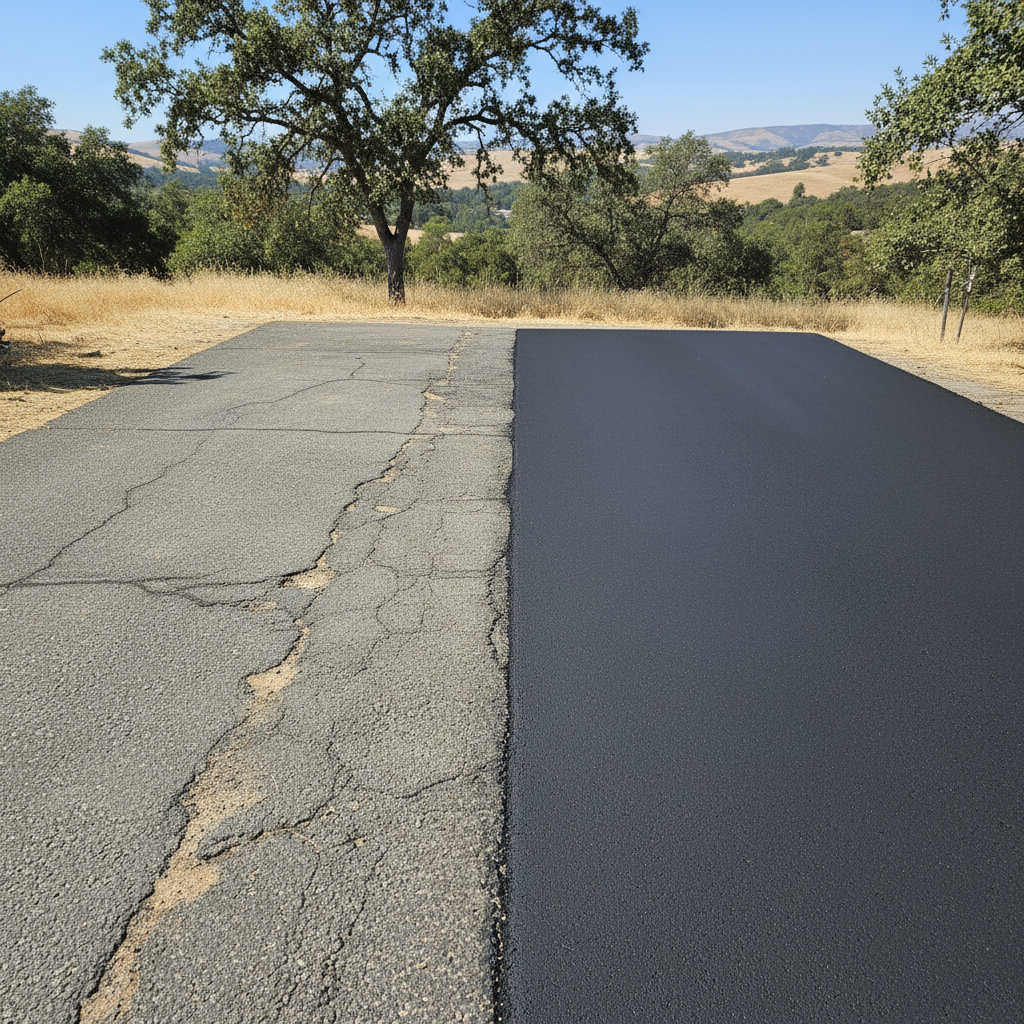
Alright, let's talk about keeping your asphalt driveway in tip-top shape right here in Oroville. You've probably heard about slurry sealing, and maybe you've even had it done before. It's a smart way to protect your investment, sure, but not all slurry seals are created equal. When you're checking out your options, you'll usually come across two main types: conventional slurry seal and polymer-modified slurry seal. So, what's the real difference, and which one makes the most sense for your home?
As a local contractor, I've seen firsthand how Oroville's weather — those scorching summers and occasional heavy rains — can really beat up a driveway. And don't forget our local soils, often a silt loam or clay-heavy, which can shift and put stress on pavement. That's why picking the right material really matters. Let's dig in.
What Exactly Is Slurry Seal?
First off, a quick reminder. Slurry seal isn't just a fancy name for sealcoating; it's a thicker, tougher protective layer. It's a mix of asphalt emulsion, water, fine aggregate (those tiny crushed rocks), and some additives. We apply this mixture cold to your existing asphalt. It fills in small cracks, smooths out the surface, and gives your driveway that fresh, uniform black look, all while protecting it from the sun, rain, and traffic.
Conventional Slurry Seal: The Old Standby
This is your basic, standard slurry seal. It uses a simple asphalt emulsion. Think of it as the original recipe, if you will. It's been around for ages and does a decent job for general pavement preservation.
Cost
Generally speaking, conventional slurry seal is the cheaper choice upfront. It costs less per square foot than its polymer-modified cousin. If you're on a tight budget and your driveway doesn't see a ton of traffic, this might seem like a good way to go.
Durability & Longevity
A conventional slurry seal will definitely make your driveway last longer by protecting it from oxidation and water getting in. It's good for sealing minor cracks and making things look new again. But here's the thing: it doesn't offer the same flexibility or resistance to wear and tear that polymer-modified options do. It might be more likely to show reflective cracking over severe cracks if you don't pre-seal them first. You can probably expect it to last maybe 3-6 years, sometimes up to 7, especially on pavements that were in good shape to begin with.
Maintenance
Like any asphalt surface, you'll need to clean it regularly. And you'll want to keep an eye out for new cracks as it gets older, fixing them quickly to stop water damage.
Appearance
It gives you that deep, rich black color that makes a driveway look brand new. The texture can feel a bit rough at first, but traffic and weather usually smooth it out over time.
Polymer-Modified Slurry Seal: The Upgrade
Now, this is where things get interesting, especially for places like Oroville. Polymer-modified slurry seal includes special polymers (like little rubber particles) mixed into the asphalt emulsion. These polymers aren't just for show; they really change how the material performs.
Cost
You'll pay a bit more for polymer-modified slurry seal right away. The specialized materials and additives simply cost more. But don't let that initial price tag scare you off; we'll talk about the long-term value in just a moment.
Durability & Longevity
This is the big plus. The polymers make the slurry seal much more flexible, durable, and resistant to cracking and rutting. It stands up better to the expansion and contraction that comes with our hot Oroville summers and cooler winters. It's also tougher against power steering scuffs, which is great for residential driveways where cars are constantly turning. You can often expect this type of slurry seal to last two or three times longer than conventional slurry, possibly extending your driveway's life by 7-9 years or even more.
Maintenance
While you'll still need to do basic cleaning, its enhanced durability means you might deal with fewer cracks and less overall deterioration, potentially cutting down on how often you need minor repairs.
Appearance
It still gives you that fresh, black look. The texture might be a little different depending on the aggregate size used (Type I uses finer aggregate for a smoother finish, while Type II is coarser and more common for residential driveways). But the main benefit here is that it holds up better visually over time because it resists weathering and traffic better.
My Recommendation for Oroville Homeowners
For most homeowners in Oroville, especially considering our local climate and soil conditions, I almost always suggest going with a polymer-modified slurry seal. Here's why:
- Better for our Climate: Those high summer temperatures we get here in Oroville can make asphalt soft and prone to rutting. Polymer modification helps the slurry resist this. And when it cools down, the added flexibility helps prevent cracking from thermal expansion and contraction.
- Longer Lasting: While the upfront cost is a bit higher, the significantly extended lifespan of polymer-modified slurry means you won't need to reapply it as often. That saves you money and hassle in the long run. It's just a smarter investment.
- Increased Durability: With all the constant turning and stopping on residential driveways, polymer-modified slurry holds up better against scuffing and general wear.
Think of it this way: you're not just buying a fresh black surface; you're buying protection and, well, peace of mind. A conventional slurry seal is okay for light-duty, but for a driveway that gets regular use and has to stand up to Oroville's conditions, the polymer-modified option is simply a smarter, more economical choice over time. It's built to last.
Here at Apex Asphalt Solutions, we've seen the difference it makes. We want your driveway to look good and perform well for years, not just a few seasons. If you've got questions or want to figure out the best approach for your specific driveway, give us a call. We're here to help you make the right choice.