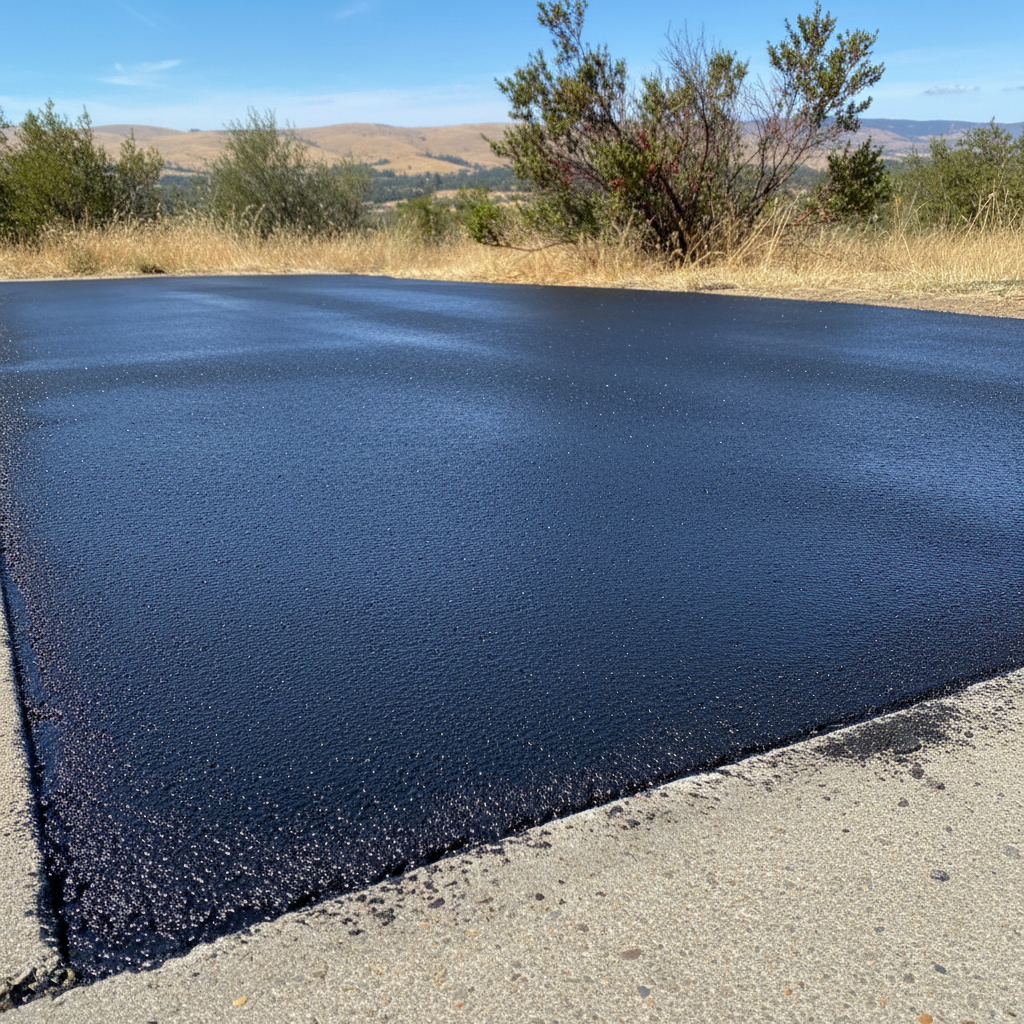
Alright, let's talk sealcoating. I hear a lot of the same questions from homeowners around Oroville, and that's great! It means you're really thinking about your investment. So, I figured I'd just lay out the answers to the most common stuff I hear. No fancy marketing talk, just the straight goods from someone who's been doing this for a while.
What exactly is sealcoating and why do I need it?
Think of sealcoating like sunscreen and a protective topcoat for your asphalt driveway. We apply a liquid mixture, usually made of asphalt emulsion, fillers, and additives, to your existing pavement's surface. Why do you need it? Well, asphalt takes a beating, especially here in Oroville with our hot summers and those occasional heavy winter rains. The sun's UV rays dry it out, making it brittle and prone to cracking. Then water seeps into those cracks, freezes, expands, and suddenly you've got bigger problems.
Sealcoating puts a fresh, protective layer over everything. It seals those tiny hairline cracks, stops water from getting in, and keeps the sun from oxidizing the asphalt binders. Plus, it brings back that nice, dark black color. That helps it absorb more heat in the winter to melt ice and snow faster, and frankly, just makes your property look a whole lot better. It's really about protecting your investment and making your driveway last for years longer.
How often should I sealcoat my driveway?
This is probably the most asked question, and the answer isn't a one-size-fits-all. Generally, for most residential driveways around Oroville, I recommend sealcoating every 2 to 3 years. Now, that can change based on a few things:
- Traffic: If you've got a busy driveway with multiple cars coming and going all day, you might want to do it closer to every two years.
- Sun Exposure: Driveways that get blasted by the sun all day, especially those facing south, tend to wear faster.
- Drainage: If water pools on your driveway, that's going to speed up wear.
- Original Asphalt Quality: A well-laid, good quality asphalt job will hold up better between sealcoats.
The best thing to do is just keep an eye on it. If you start seeing it fade to gray, or notice a lot of small cracks popping up, it's probably time. Don't wait until it's a mess; preventative maintenance is always cheaper than repairs, right?
What's the best time of year to get sealcoating done in Oroville?
Timing is everything with sealcoating, especially with our Oroville weather. You need warm, dry conditions for the sealcoat to cure properly. That means no rain, and temperatures ideally above 50°F and rising. For us, that usually means late spring, summer, and early fall are the sweet spots. Think April through October, generally.
Trying to do it when it's too cold or if rain is in the forecast is just asking for trouble. The material won't bond right, it won't cure evenly, and you'll end up with a job that doesn't last. We always check the forecast carefully before scheduling anything, because a good job depends on good weather.
How long does it take to dry and when can I drive on it?
This is another big one, because nobody likes having their driveway out of commission. After we apply the sealcoat, it needs time to dry and cure. Typically, you're looking at 24 to 48 hours before you can drive on it. Pedestrian traffic, like walking or letting pets on it, can usually happen after about 12-24 hours, but it's still best to be careful.
Again, weather plays a huge role. If it's a hot, sunny day with low humidity, it'll dry faster. If it's cooler or humid, it'll take longer. We'll always give you a specific timeframe when we finish the job, but plan on keeping cars off it for at least a full day, maybe two, just to be safe. It's worth the wait to let it cure completely and get the best protection.
Can you sealcoat over cracks and potholes?
Not directly, no. Sealcoating is a surface treatment. It's not designed to fill significant cracks or repair structural damage. If you've got cracks wider than, say, a quarter-inch, or any potholes, we need to repair those before we apply the sealcoat. We'll clean out the cracks, fill them with a hot rubberized crack filler, and patch any potholes with new asphalt. Then, once those repairs have set, we can come in with the sealcoat.
Trying to sealcoat over unrepaired damage is just a waste of money. The cracks will just show through, and the sealcoat won't prevent them from getting worse. We always inspect your driveway thoroughly and let you know what repairs are needed first. It's all part of making sure you get a durable, long-lasting result from Apex Asphalt Solutions.
Will sealcoating make my driveway slippery?
When it's first applied and still wet, yes, it can be a bit slick, just like any wet surface. But once it's fully cured, a properly applied sealcoat shouldn't make your driveway excessively slippery. Good quality sealcoat mixes include aggregates, like sand, that provide traction. We make sure our mix has the right amount of aggregate to give you a safe, non-slip surface once it's dry.
Now, if it's raining or there's frost, any paved surface can be slippery, sealcoated or not. But the sealcoat itself isn't going to turn your driveway into an ice rink. We're pretty careful about getting the right texture for safety and durability.
Hope this clears up some of those common questions you might have. If you're in Oroville and thinking about sealcoating, give us a call. We're happy to take a look and give you an honest assessment of what your driveway needs.